Bedding Guide
Choosing a Wool Bed Topper: Fill, Loft, and Care Questions
A wool topper can change the feel of a mattress without replacing it, adding a breathable layer of cushioning and a buffer between your body and the bed. But “wool” alone doesn’t tell you how a topper will feel, how long it may hold its shape, or what looking after it will involve. Fill, loft, quilting, fit and care instructions all matter.
A practical, independent guide for Ontario mattress shoppers
A topper is a relatively small addition with a noticeable job: it changes the surface of the mattress. Wool versions appeal to sleepers looking for natural fibres, gentle cushioning and a bed layer that can help manage moisture and temperature. Yet the category includes products with different amounts of wool, constructions and thicknesses. Two toppers made from wool may feel quite unlike each other.
The useful question is not whether wool is inherently the right choice. It is whether a particular wool bed topper suits your mattress, preferred feel, household routines and expectations. A thin, lightly filled pad may soften the surface only slightly. A thicker, denser topper can provide a more substantial buffer, though it will not necessarily correct a mattress that is sagging or failing to support you.
This guide explains what to check before choosing a wool mattress topper: how fill and loft influence feel, why construction affects performance, how to verify materials and dimensions, and what wool topper care may require. The aim is to make product descriptions easier to read and comparisons more useful.
Start with the change you want
Before comparing labels, identify what you want the topper to do. Are you hoping to take the edge off a firm mattress, add a softly padded feel, or create a removable layer that can be aired and cared for separately? A clear goal helps distinguish a topper from a protector. A protector is primarily intended to guard the mattress against spills, dirt and everyday wear; a topper is usually chosen to alter surface comfort. Some products offer a degree of both, but the functions are not interchangeable.
Consider the condition of the mattress underneath. A topper can add cushioning, but it cannot restore a collapsed support core, even out a deep dip or resolve a structural problem. If the mattress is visibly sagging, uneven or beyond its useful life, adding a soft layer may only disguise the issue temporarily. The topper also inherits the shape and support characteristics of the mattress beneath it.
Think about your sleeping position and what feels comfortable across a full night, not just during a brief showroom test. A side sleeper may want some cushioning around the shoulder and hip; a back or stomach sleeper may prefer a firmer, less yielding surface. These are starting points, not rules. Body shape, mattress construction and personal comfort all influence the result.
For Ontario households, seasonal changes may be part of the decision. Wool fibres can absorb and release moisture and are often selected for their temperature-regulating qualities. That does not mean every wool topper will feel cool to every sleeper, or that it can compensate for a room that is too warm. Bedding, sleepwear, room temperature and individual preferences all contribute to comfort.
Fill: what does “wool” mean on the label?
Fill describes the material inside the topper and, ideally, how much of it is present. A product description may state that it contains wool without making clear whether wool forms the entire filling, is blended with other fibres, or appears only in a particular layer. Read the full materials list rather than relying on a name or headline.
Useful details include the fibre type, whether the wool is blended, the filling weight, and the materials used in the cover and any backing. A cover made from cotton, for example, is a separate component from the wool filling. Knowing both helps you understand what touches the mattress, what touches the sleeper and what may need special care. If details are missing, ask the retailer for a written specification.
Fill weight can help compare products of the same size and similar construction, but it is not a universal measure of softness or quality. Fibre length, processing, quilting and how the fill is distributed all affect the result. A larger amount of wool does not automatically mean a better match for your needs. Look for enough information to compare like with like, and treat vague claims such as “luxurious natural comfort” as marketing language until supported by specifics.
Claims about organic, natural, chemical-free or sustainably sourced materials should be assessed separately. Ask which component a claim applies to and whether there is a named standard or certification that can be verified. A certification may relate to fibre content, processing or manufacturing practices; it does not, by itself, prove that a topper will feel comfortable or last a certain number of years. Avoid assuming that a claim about one material covers every part of the product.
Wool is a natural fibre, but people can still have sensitivities or preferences that make it unsuitable. If you are sensitive to wool, animal fibres, odours or certain finishes, check the full composition and return terms before buying. A removable cover or a tightly woven outer fabric may affect contact, but it should not be treated as a guarantee against irritation.
Loft and thickness: how much cushioning is enough?
Loft refers to the height or fullness of the topper. In everyday product listings, it may be described as thickness, depth or profile. Those terms can be measured in different ways, and a topper may compress under body weight, so the listed measurement is not always a direct prediction of how much cushioning you will feel.
A low-loft wool topper is generally a choice for a subtle adjustment: a little softness, a lightly padded surface or an extra layer between the sleeper and mattress. A higher-loft option may feel more cushioned and change the mattress surface more noticeably. More height is not automatically better. A lofty, soft layer can feel too yielding for someone seeking a stable surface, and it may change the way a fitted sheet fits.
Check whether the manufacturer gives a measurement for the finished product, a range, or a measurement taken before compression. Ask whether the stated loft is approximate and whether the topper is intended to settle with use. If exact dimensions are important, confirm them with the seller rather than assuming a photograph or a general size label tells the whole story.
Construction also influences how loft behaves. Wool may be held in place with quilting, stitched channels, tufts or another method. Quilting helps distribute the fill, but the spacing and pattern can create a more or less even surface. Inspect the product description for information about stitching, fill compartments and edge construction. If the design is not clear, ask how the filling is prevented from shifting.
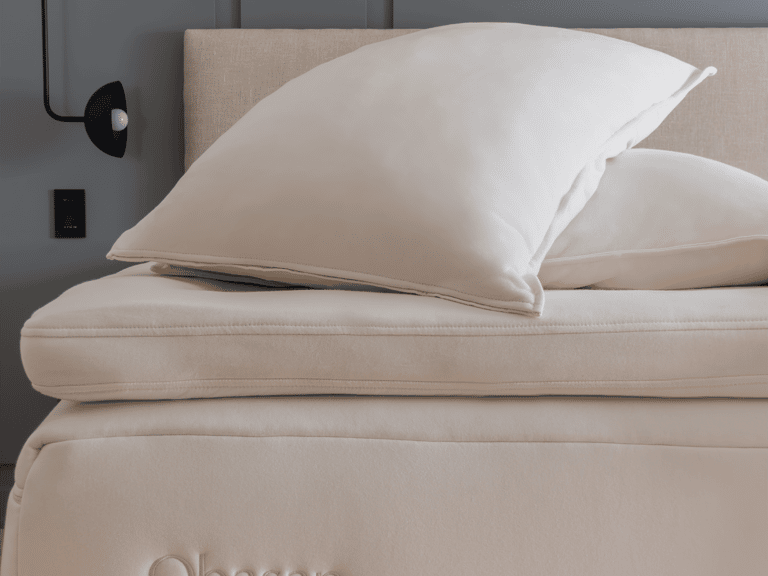
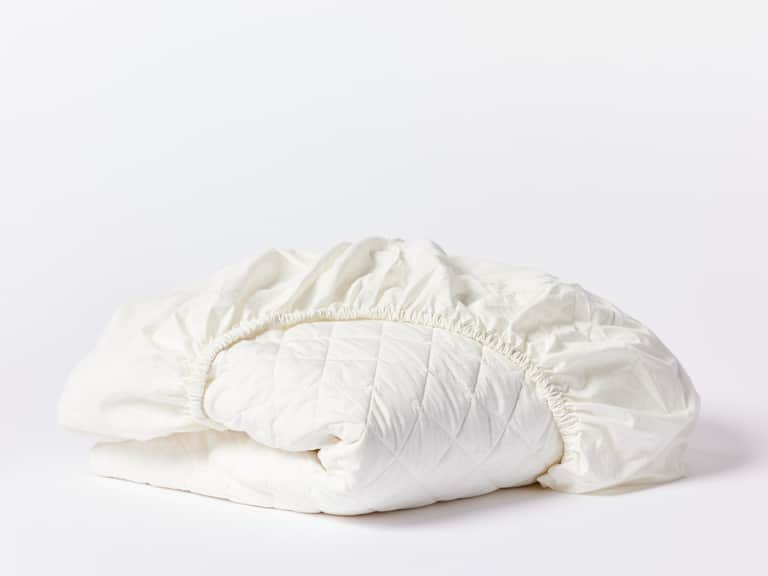
Consider the topper’s total height alongside your mattress and bed frame. A deeper layer can make it harder to keep a fitted sheet in place, especially if the mattress already has a pillow top or substantial padding. Measure the mattress and topper together, then check the pocket depth of the fitted sheets you plan to use. A secure fit matters: loose bedding can bunch up and undermine the comfort you are trying to improve.
Construction, fit and everyday use
Even a well-described filling can disappoint if the topper does not fit the bed. Confirm the size by its actual measurements, not only by a label such as queen or king. Bedding dimensions can differ between manufacturers and markets. Measure the mattress from side to side and head to foot, and check whether the topper has elastic straps, a fitted skirt or another attachment system.
Attachment affects how the topper behaves when the bed is used. A loose, unattached layer may shift more easily when sleepers move or when sheets are changed. Straps can help keep corners in place, while a fitted skirt may suit some mattress depths better than others. Neither design is universally superior: the best option is the one that fits your mattress securely without stretching or pulling at the seams.
Ask whether the topper is reversible, whether both sides are intended for use and whether it needs to be rotated. A reversible design may spread wear over time, but only if the manufacturer says both surfaces are suitable for sleeping. Check the care label before turning or rotating it; some constructions have a clearly designated top side or a cover that should remain in place.
Wool toppers are not all designed to be used in the same way. Some may be placed directly on the mattress beneath a fitted sheet. Others may have a cover or fastening system that changes the order of layers. Follow the manufacturer’s directions. If you plan to use a mattress protector as well, check that the combined layers do not make the bed too warm or interfere with a secure sheet fit.
Wool topper care: read the label before you buy
Care is one of the most important differences between a wool topper and bedding designed for routine machine washing. Wool filling may require airing, spot cleaning or professional care rather than a regular wash cycle. The care label is the authority for the specific product. Do not assume that a wool item can be washed because another wool product in the home can.
Ask what to do about common mishaps. Can the cover be removed and washed? Is spot cleaning allowed, and with what kind of method? Can the topper be exposed to direct sunlight or heat? Does the manufacturer recommend professional cleaning? These are practical questions, particularly for families with children, people sharing a bed with pets, or anyone who wants a washable sleep surface.
Airing may help refresh a topper between deeper cleaning, but follow the maker’s instructions about where and how to do it. Keep the topper dry and well ventilated, and avoid placing it near strong heat unless the manufacturer explicitly permits it. Wet or damp wool should not be stored away. If a spill occurs, respond promptly according to the care guidance rather than soaking the filling or using unapproved chemicals.
Regular washing is not necessarily a reasonable expectation for a wool-filled layer. If ease of laundering is a priority, compare alternatives and choose a product whose maintenance routine suits your household. A washable cover or a separately washable protector may simplify surface care, but it does not make the wool core washable. Check that any protective layer is compatible with the topper and does not undermine the feel you want.
Storage matters, too. If the topper will be removed seasonally, clean or air it as directed, let it dry fully and store it in a clean, dry place. Avoid compressing it for long periods unless the manufacturer says that is acceptable. Keep the care instructions and proof of purchase; they may be useful if you need warranty or return support later.
Questions to ask about claims and value
A high price does not guarantee that a topper will suit a particular sleeper, and a low price does not reveal whether it is poorly made. Compare the details behind the price: fibre composition, fill weight, cover material, construction, dimensions, care requirements, warranty and return policy. The useful comparison is between products with similar specifications, not between names that merely share the word “wool.”
Before purchasing, look for direct answers to these questions:
- What percentage of the filling is wool, and are other fibres included?
- What materials make up the cover, backing and fastening system?
- How much does the filling weigh, and how is it distributed?
- What are the topper’s finished dimensions and stated loft?
- How is the fill secured, and is the topper reversible or rotatable?
- What cleaning methods are permitted, and can any cover be removed?
- Are material or environmental claims supported by a named, verifiable standard?
- What are the return conditions, warranty limits and costs of shipping a return?
For Ontario consumers, check the seller’s written terms before ordering, particularly when buying online. Confirm who pays return shipping, whether opened bedding can be returned, and whether a trial period has conditions. A warranty may cover defects in workmanship or materials but exclude ordinary compression, changes in feel, stains or damage from incorrect care. Read the actual wording rather than relying on a short summary.
It can help to keep a simple comparison sheet. Record each topper’s fill, cover, dimensions, loft, care instructions, price and return terms. This turns a set of polished product pages into a more practical decision. It also makes gaps in the information easier to spot before you commit.
When a wool topper may—and may not—make sense
A wool mattress topper may suit someone who wants a natural-fibre layer, modest cushioning and a care routine built around airing or targeted cleaning. It can also appeal to people who would rather adjust the surface of a sound mattress than replace the entire bed. Whether the result feels right depends on the topper’s construction and the sleeper’s preferences, not simply on the fibre name.
It may be a poor fit if you need a product that can be routinely machine washed, want a pronounced change in mattress support, or expect a topper to correct a serious sag. It may also be unsuitable if wool conflicts with a personal sensitivity or if the product’s maintenance requirements do not fit your home. In those cases, a washable pad, a different fill or a replacement mattress may be more practical.
Think of the topper as one part of a bedding system. The mattress provides the underlying support; the topper changes the surface; sheets and protectors influence contact, temperature and upkeep. A pillow affects head and neck positioning. Adjusting one layer at a time makes it easier to understand what is helping and what is not.
A measured choice is better than a dramatic promise
Wool can be a useful bedding material, but a product’s label is only the beginning of the decision. Find out what the filling contains, how much loft it offers, how the fill is secured and whether the dimensions suit your bed. Then read the care instructions and return terms with the same attention you give the comfort claims.
The best wool bed topper is not necessarily the thickest, most expensive or most elaborate. It is the one that makes the particular mattress feel closer to what you want, fits securely, and can be maintained without surprise. A few careful questions before buying can prevent a common mistake: choosing by material name alone and discovering the important details only after the package arrives.